'/%3e%3cpath%20d='m3.96875-28.015625h12.03125c1.738281%200%203.28125.25%204.625.75%201.351562.492187%202.46875%201.179687%203.34375%202.0625.695312.6875%201.226562%201.5%201.59375%202.4375.375.929687.5625%201.953125.5625%203.078125v.078125c0%201.179687-.1875%202.230469-.5625%203.15625-.367188.917969-.890625%201.714844-1.578125%202.390625-.679687.679688-1.484375%201.242188-2.421875%201.6875-.929688.4375-1.9375.75-3.03125.9375l8.59375%2011.4375h-3.875l-8.125-10.890625h-8v10.890625h-3.15625zm11.75%2014.296875c1.039062%200%202-.132812%202.875-.40625.882812-.269531%201.644531-.648438%202.28125-1.140625.644531-.488281%201.144531-1.085937%201.5-1.796875.363281-.707031.546875-1.515625.546875-2.421875v-.078125c0-1.738281-.625-3.09375-1.875-4.0625-1.25-.976562-3.011719-1.46875-5.28125-1.46875h-8.640625v11.375zm0%200'%20fill='%23000'%20transform='translate(133.876559%20199.437321)'/%3e%3cpath%20d='m14.328125-28.21875h2.953125l12.765625%2028.21875h-3.390625l-3.28125-7.40625h-15.25l-3.328125%207.40625h-3.234375zm7.796875%2017.96875-6.359375-14.28125-6.40625%2014.28125zm0%200'%20fill='%23000'%20transform='translate(170.934937%20199.437321)'/%3e%3cpath%20d='m4.234375-28.015625h3.171875v28.015625h-3.171875zm0%200'%20fill='%23000'%20transform='translate(210.674618%20199.437321)'/%3e%3cpath%20d='m1.5625-28.015625h3.515625l9.96875%2024.140625%2010-24.140625h3.40625l-12.046875%2028.21875h-2.796875zm0%200'%20fill='%23000'%20transform='translate(230.444594%20199.437321)'/%3e%3cpath%20d='m3.96875-28.015625h20.234375v2.890625h-17.078125v9.5625h15.28125v2.875h-15.28125v9.8125h17.28125v2.875h-20.4375zm0%200'%20fill='%23000'%20transform='translate(268.583504%20199.437321)'/%3e%3cg%20fill='none'%20stroke='%23000'%20stroke-width='2'%3e%3cpath%20d='m.00089378.998939h147.99480122'%20transform='matrix(.75%200%200%20.75%2069.815736%20154.37189)'/%3e%3cpath%20d='m.00089378.999531h147.99480122'%20transform='matrix(.75%200%200%20.75%2069.815736%20215.461289)'/%3e%3cpath%20d='m.00230561.99905h82.37500539'%20transform='matrix(0%20-.75%20.75%200%2069.758525%20216.904073)'/%3e%3c/g%3e%3c/svg%3e)
AI Isn't a Magic Wand. It's Leverage. And Most Businesses Misjudge It.

Most founders I talk to feel like they're being lied to about AI.
They see headlines and posts promising instant transformation and full automation. But when they look at their own operations, they see this gap between the hype and the reality of getting a system to actually work.
Most businesses understand that AI isn't a magic wand.
But what many don't realize is that it's actually leverage.
And like any form of leverage, it only works if the underlying structure is sound.
The Fantasy Most AI Pitches Sell
If you've been pitched an AI solution recently, you've probably heard a lot of "yes."
Yes, it can automate your entire sales floor. Yes, it can replace your customer service team overnight. Yes, it will be 100% accurate from day one.
This framing of AI as a "set and forget" miracle is the primary reason Gartner predicts that 60% of AI projects will be abandoned through 2026. Founders are being sold certainty in an environment that requires iteration.
When a vendor promises end-to-end automation without mentioning constraints, they aren't selling you a solution. They're selling you a fantasy. Serious operators sense it. They know that anything worth doing in a business — especially in regulated industries like mortgage or healthcare — requires not just a "smart" model, but a durable system behind it.
Why "Saying Yes" Feels Safer Than Telling the Truth
In the agency world, saying "no" is often seen as a weakness.
Vendors worry that if they explain the limits of an automation or the time required for optimization, they'll lose the deal to someone who promises the moon. But for a buyer, "yes" to nearly everything should be a massive waving red flag.
When we tell a founder we can't build their entire vision in one month, or that a specific workflow needs a human-in-the-loop for the first 90 days, we aren't rejecting the project. We're explaining the sequencing — and reality — required for success.
Honesty about constraints, in my humble opinion, goes a lot further toward building trust than promising outcomes you can't control. Real AI adoption is about solving one specific problem at a time, not trying to boil the entire ocean.
AI Is Leverage, Not Labor Replacement
One of the biggest mistakes businesses make is viewing AI as a way to replace people rather than a way to amplify them.
AI does not replace thinking, ownership, creativity, insights, or discipline. In fact, it demands more of all of it. If your current process is broken, AI will simply help you break things faster. (There's value in that, too.)
I saw this exact thing play out in a behavioral health project we ran.
Our client wanted to implement an AI-driven outreach assistant designed to engage C-Level Union decision makers and get them on a call with the clinic's Union liaison. The model was technically "smart," but the system failed because the handoff points were not clearly defined. When a Union leader answered our AI Employee with an edge-case response, there was no SOP for a human to step in. The accountability was abstract, and the implementation collapsed.
Contrast that with a mortgage client we worked with. Instead of trying to automate the entire loan process, we built two specific AI Employees.
The first has one job: answer every incoming email or form immediately — 24/7 — answer FAQs, provide assistance, and route to the right department.
The second, our "Feedback AI," interacts with existing customers to handle fact-finding, uncover positives and negatives about experiences, and solicit a positive review based on sentiment.
These aren't "tools" for the team to use; they are systems that do all the work. Because they were scoped to specific functions, they provided immediate AI automation ROI without disrupting the core business.
Why Time to Optimize Is Not Optional
The first version of any AI system is supposed to be wrong.
Not "broken," but unoptimized.
Many founders hesitate to start because they want 100% certainty before they commit. But in the world of reliable AI systems, optimization is more about how the system becomes useful than about fixing mistakes.
McKinsey's 2025 research shows that while 92% of companies plan to increase AI investment, only a small fraction are actually seeing significant returns. The difference is often patience.
If you wait until a system is perfect to deploy it, you'll never deploy it. Meanwhile, your competitors who are willing to launch Version 1 and iterate are building a competitive moat you won't be able to cross in a year.
Why End-to-End AI Fails as a Starting Point
Think of building AI systems like building a house. You start with a sturdy foundation (or piers) and then you build up from there.
Most failed AI projects try to go end-to-end immediately. They want a system that handles everything from lead gen to closing. But AI workflows are most durable when they are modular.
By scoping AI Employees to specific functions — like the email-routing one or the feedback-collection one mentioned earlier — you build trust and momentum. You prove the ROI on a small scale, which gives the organization confidence to expand.
What Serious Founders Eventually Notice
After the initial wave of hype dies down, serious founders start to notice a pattern.
The vendors who explain the limits of the technology are the ones who actually deliver results.
The ones who avoid hard truths are usually optimizing for the sale, not the outcome.
Realism is a competitive advantage. When you accept that AI requires ownership and time to optimize, you stop looking for a magic wand and start looking for leverage.
What This Means for AI Buyers
Going into the next phase of AI adoption, "smart" shouldn't just refer to the model. It should refer to the strategy.
A smart strategy prioritizes:
- Ownership: Who is responsible for the system's output?
- Durability: Will this system still work when the model updates?
- ROI: Is this solving a revenue-connected problem, or just a "cool" one?
AI isn't "failing" — I'm tired of hearing this. But many businesses are failing to prepare for how it actually works. The winners here will not only be the ones who moved the fastest, but the ones who were the most disciplined.
Related Reading
Keep reading.
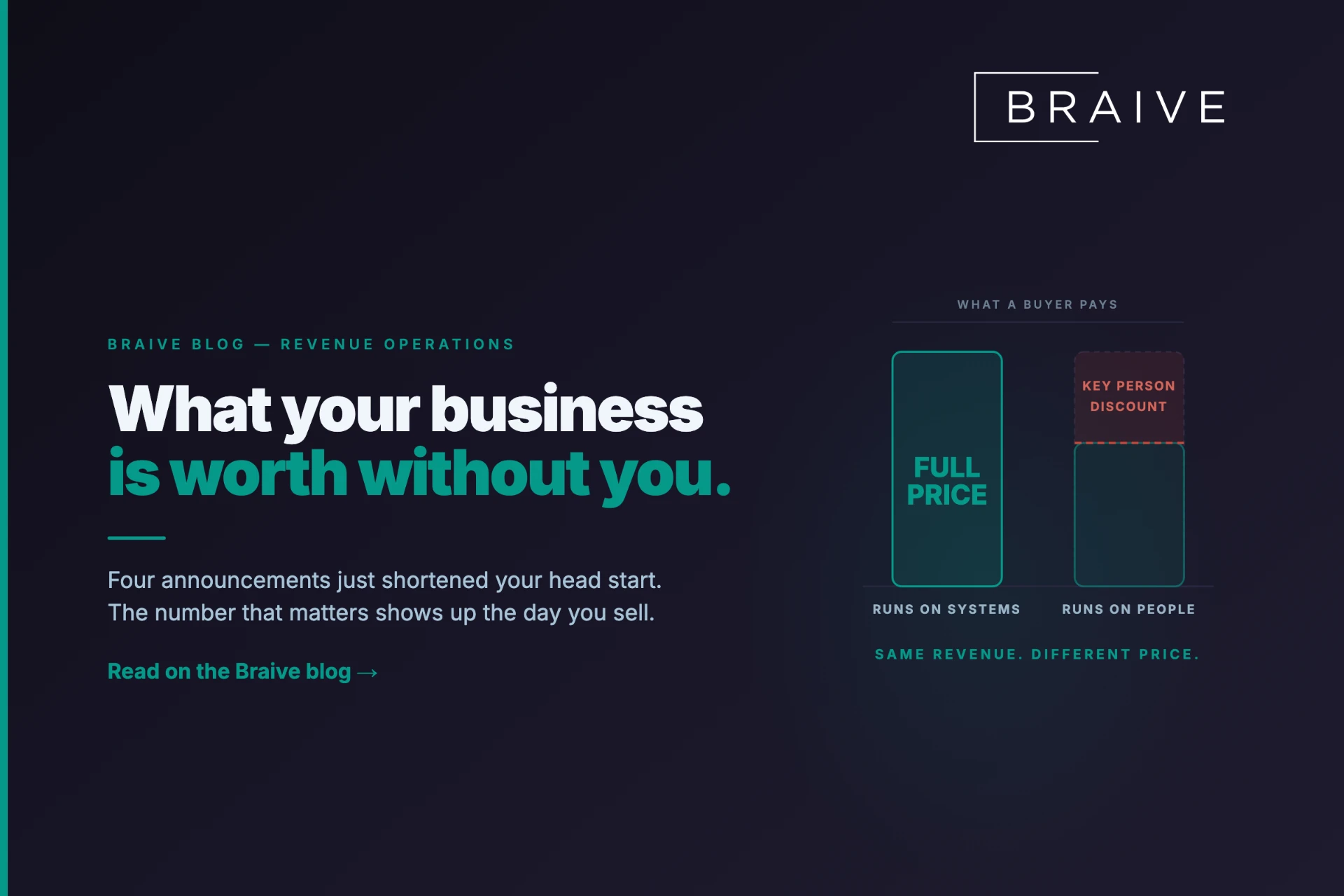
What Your Business Is Worth When You're Not in the Room
Four AI announcements just shortened your head start. What that window is worth shows up the day you sell, in an adjustment buyers call the key person discount.
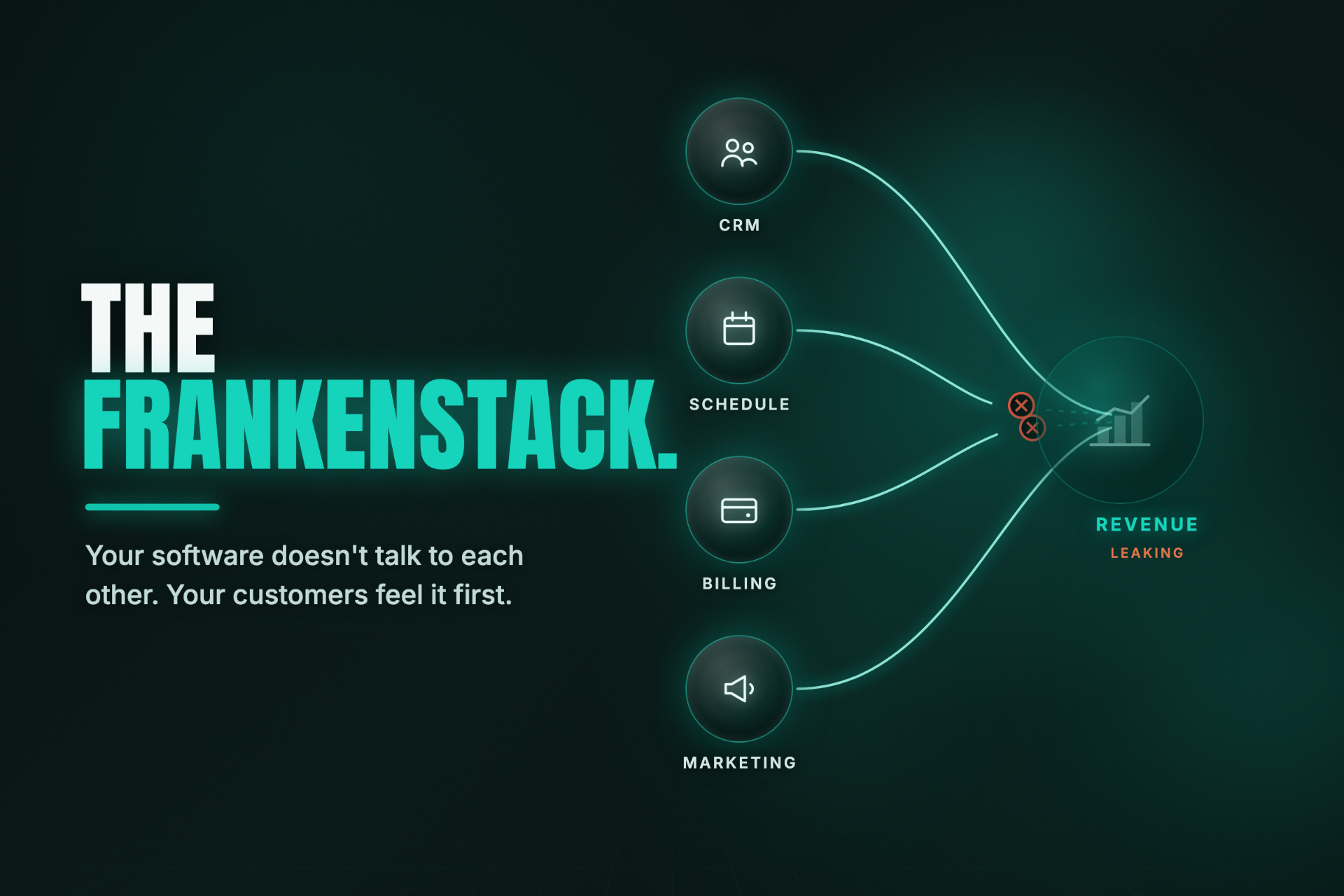
The Frankenstack: What Disconnected Software Is Costing You In Revenue
Your software doesn't talk to each other. See what the gaps between your tools cost you in lost customers and leaked revenue, and how to find them.
See where your pipeline is exposed.
12 questions. 3 minutes. Find out exactly where your operation is losing revenue — and what to do about it.