'/%3e%3cpath%20d='m3.96875-28.015625h12.03125c1.738281%200%203.28125.25%204.625.75%201.351562.492187%202.46875%201.179687%203.34375%202.0625.695312.6875%201.226562%201.5%201.59375%202.4375.375.929687.5625%201.953125.5625%203.078125v.078125c0%201.179687-.1875%202.230469-.5625%203.15625-.367188.917969-.890625%201.714844-1.578125%202.390625-.679687.679688-1.484375%201.242188-2.421875%201.6875-.929688.4375-1.9375.75-3.03125.9375l8.59375%2011.4375h-3.875l-8.125-10.890625h-8v10.890625h-3.15625zm11.75%2014.296875c1.039062%200%202-.132812%202.875-.40625.882812-.269531%201.644531-.648438%202.28125-1.140625.644531-.488281%201.144531-1.085937%201.5-1.796875.363281-.707031.546875-1.515625.546875-2.421875v-.078125c0-1.738281-.625-3.09375-1.875-4.0625-1.25-.976562-3.011719-1.46875-5.28125-1.46875h-8.640625v11.375zm0%200'%20fill='%23000'%20transform='translate(133.876559%20199.437321)'/%3e%3cpath%20d='m14.328125-28.21875h2.953125l12.765625%2028.21875h-3.390625l-3.28125-7.40625h-15.25l-3.328125%207.40625h-3.234375zm7.796875%2017.96875-6.359375-14.28125-6.40625%2014.28125zm0%200'%20fill='%23000'%20transform='translate(170.934937%20199.437321)'/%3e%3cpath%20d='m4.234375-28.015625h3.171875v28.015625h-3.171875zm0%200'%20fill='%23000'%20transform='translate(210.674618%20199.437321)'/%3e%3cpath%20d='m1.5625-28.015625h3.515625l9.96875%2024.140625%2010-24.140625h3.40625l-12.046875%2028.21875h-2.796875zm0%200'%20fill='%23000'%20transform='translate(230.444594%20199.437321)'/%3e%3cpath%20d='m3.96875-28.015625h20.234375v2.890625h-17.078125v9.5625h15.28125v2.875h-15.28125v9.8125h17.28125v2.875h-20.4375zm0%200'%20fill='%23000'%20transform='translate(268.583504%20199.437321)'/%3e%3cg%20fill='none'%20stroke='%23000'%20stroke-width='2'%3e%3cpath%20d='m.00089378.998939h147.99480122'%20transform='matrix(.75%200%200%20.75%2069.815736%20154.37189)'/%3e%3cpath%20d='m.00089378.999531h147.99480122'%20transform='matrix(.75%200%200%20.75%2069.815736%20215.461289)'/%3e%3cpath%20d='m.00230561.99905h82.37500539'%20transform='matrix(0%20-.75%20.75%200%2069.758525%20216.904073)'/%3e%3c/g%3e%3c/svg%3e)
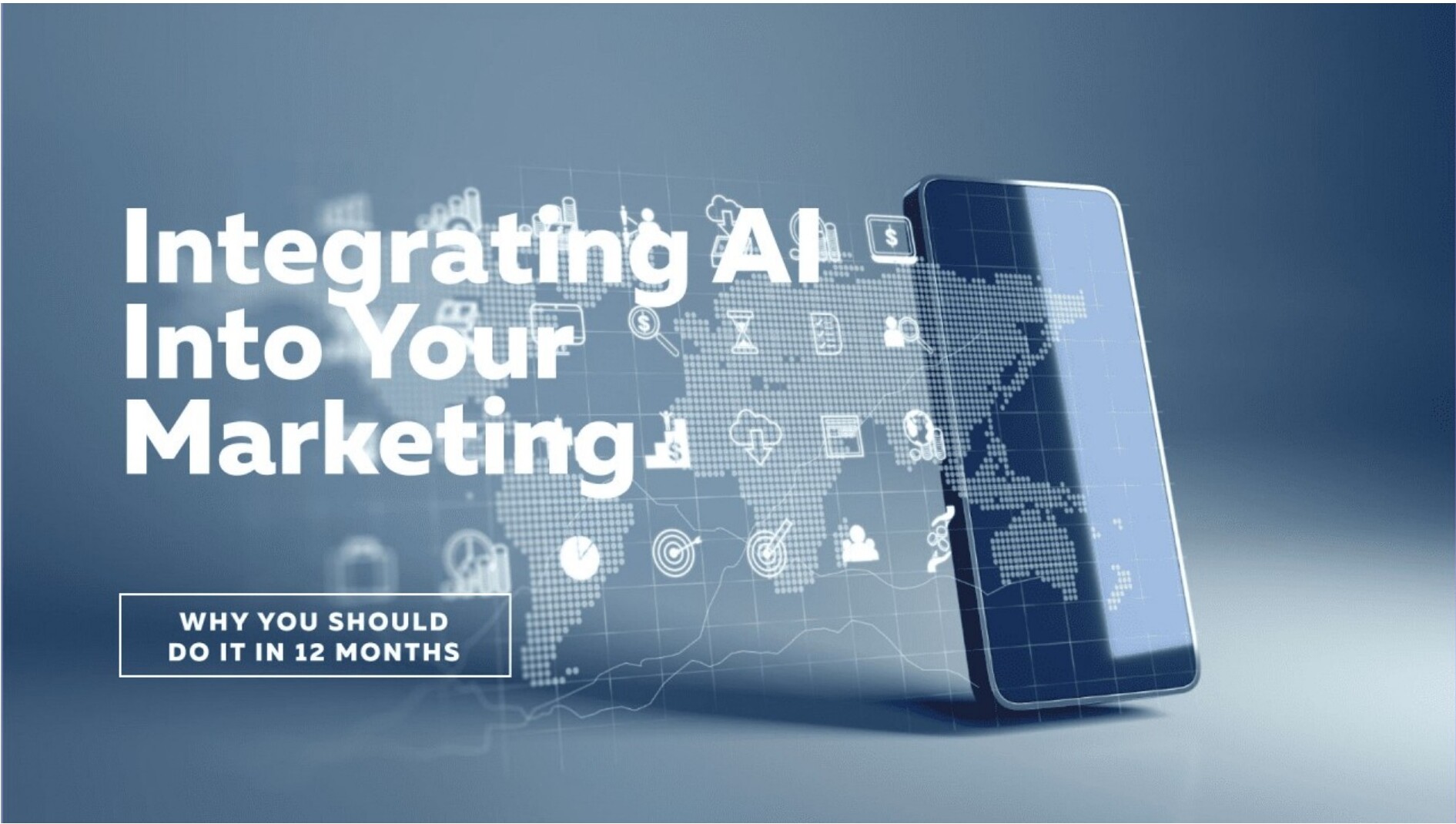
You Have 12 Months to Integrate AI into Your Marketing Operations. Here's Why.
The Clock is Ticking
Why 12 months? Well, the market is moving pretty rapidly. Every day, your competitors are adopting AI. Every day they gain a little more of an edge — reaching customers better and faster, saving costs, and making smarter choices. The longer you wait, the more it's ultimately going to cost you. If you miss this window, you risk falling so far behind that catching up will feel like trying to win a marathon in flip-flops.
AI is changing everything. Imagine knowing exactly what each customer wants. AI helps make it possible. It can analyze research and data, find patterns, and predict behavior. Having access to and knowing how to use this kind of power lets you tailor messages and meet your customer's needs precisely — leading to higher engagement and conversions.
AI also boosts efficiency. It can automate everything from data entry and segmentation to custom email campaigns, social media posts, and website content. That saves time and reduces errors, letting your team focus on strategy, higher-value outputs, and revenue rather than routine tasks.
Despite the overwhelming evidence of what this technology can do, reluctance to adopt and integrate AI into marketing operations largely stems from a fear-based mentality and not knowing what to do or how to do it.
Fear of Falling Behind
Many companies fear being outpaced — and even replaced — by those who are adopting cutting-edge technology. And for good reason.
Kodak was a pioneer in photographic film but failed to embrace the digital photography revolution, despite inventing an early digital camera in 1975. The company was too fixated on its traditional film business and missed the opportunity to transition to digital imaging. Kodak filed for bankruptcy in 2012.
Another common example is Blockbuster Video. Blockbuster failed to adapt to the rise of online streaming and mail-order DVD rental services like Netflix. Their resistance to new technology made their brick-and-mortar stores obsolete, forcing Blockbuster into bankruptcy in 2010. They even had the chance to acquire Netflix for $50 million back in 2000 — and dismissed the threat of digital disruption.
A common theme among these failures was resistance to change and an overreliance on existing successful business models. Companies like Kodak, Nokia, and Blockbuster were market leaders but couldn't adapt quickly enough when disruptive new technologies emerged.
Conversely, AI provides businesses that understand the importance of integrating it with significant competitive advantages. Mastercard, for example, uses an AI system called the "Digital Engine" to analyze billions of online conversations in real time to identify emerging micro-trends relevant to their brand. This allows their marketing team to strategically engage with trending topics before they peak by quickly creating and publishing relevant social media content.
Fear of High Costs and Investment
The fears of Kodak and Blockbuster (and many others) about adopting new technologies — whether due to perceived high costs, lack of expertise, or doubts about profitability — allowed nimbler competitors to gain a foothold and eventually overtake them.
While the initial investment in AI might seem high, especially for smaller companies, the long-term cost savings and increased revenue potential make it worthwhile.
To illustrate: using its AI-powered Digital Engine, Mastercard realized a 37% increase in click-through rate, a 43% increase in engagement rate, a 29% decrease in cost per click, and a 32% decrease in cost per engagement.
Another great example is HubSpot agency partner Imagine Business Development. By leveraging the AI platform Seventh Sense to personalize and optimize email send times for each individual recipient, they doubled their email opens and click-through rates and increased total email conversions by 100%.
Harley-Davidson even credited 40% of their New York City sales to using the AI platform Albert, which provided insights into advertising effectiveness and optimization. Another retailer, EVISU, saw a 500% increase in e-commerce revenue after one year of using Albert. Five hundred percent.
Perhaps most importantly, the cost of not investing now will be significantly higher in the future when trying to play catch-up. Scalable AI solutions exist for different budgets, so you can start small and grow.
Fear of Complexity and Integration Challenges
Integrating AI into your current operations might seem complex and disruptive — but you don't have to do it all at once. You can start with pilot projects for quick wins, find what works for you and what doesn't, and scale up from there. Think of it as a cost-effective and efficient way to test and learn.
For example, start by using affordable AI marketing tools such as Mailchimp's AI-powered recommendations for email campaigns or HubSpot's AI-driven analytics. These tools provide small- and medium-sized businesses with powerful AI capabilities at a fraction of the cost of developing in-house solutions.
These tools are not silver bullet solutions, so use caution when generating content within these platforms. If you're not familiar with prompt engineering or you lack a strategy going in, you may end up making your content and campaigns feel AI-generated and get the reverse effect you were looking for.
You can also implement AI tools like ChatGPT or Copy.ai for creating web content or social media posts. These tools can produce content quickly, freeing up your team to focus on improving content rather than starting from scratch. There are also AI tools that offer scalable pricing models — for example, Salesforce's Einstein AI provides a suite of AI tools for CRM that scales with your business needs and budget.
Fear of Workforce Resistance
AI isn't necessarily new technology, but its recent democratization has made it far more accessible and powerful. Unless you were an early adopter, you and/or your company might lack the necessary AI expertise — and even face resistance from employees who fear they may lose their jobs to machines. There's a common saying in the industry: AI will not replace you, but someone who is AI-skilled might.
The first step to overcoming these challenges is to empower your team. By investing in training, you can upskill your existing workforce and give them a vital skill that helps future-proof your business. Offer AI training courses through platforms like Coursera, Udacity, or LinkedIn Learning. IBM offers AI training designed for business professionals, covering everything from AI basics to advanced machine learning. Google, Microsoft, Harvard (and many more) are offering FREE AI courses with no payment required.
If all of this seems daunting or too much to handle, consider partnering with a new-era marketing team that specializes in leveraging AI. Specialized partners have the expertise and experience to make the transition smoother. Traditional agencies — including digital-first agencies — often struggle with AI integration due to outdated processes, lack of technical experience, and older technology stacks. The right partner can provide tailored solutions aligned with your business goals, handle the technical aspects of AI integration, and let you and your team focus on strategic initiatives and growth.
Fear It's "Just a Fad"
A lot of companies are hesitant to invest in AI because they're unsure of its longevity and relevance. Concerns about rapid technological advancements and the fear of investing in technologies that may quickly become obsolete are valid. However, these concerns can be mitigated by understanding AI's current trajectory and its foundational role in the future of marketing and business operations.
AI is not a fleeting trend — it's a transformative technology reshaping industries. A 2023 McKinsey study found that 55% of companies have adopted AI in at least one business function. This widespread adoption underscores AI's long-term relevance and its critical role in delivering a new way to work.
One of AI's most significant strengths is its adaptability. AI systems can be updated and improved continuously, ensuring they stay at the cutting edge. The primary challenge isn't AI's adaptability — it's the speed at which it changes. Keeping up with, let alone staying ahead of, advancements in AI and the different tools and platforms available is pretty much a full-time job.
Conclusion
It's safe to say that AI is not just a passing phase. It's here to stay. The adaptability and wide-ranging applicability of AI ensure its relevance for the foreseeable future. By understanding AI's potential and investing in it strategically, businesses can overcome uncertainty and position themselves for long-term success.
Starting with pilot programs can help businesses understand AI's potential without committing to large-scale investments right away. These programs allow companies to experiment with AI applications in a more controlled way, gather data, and refine their approaches based on real-world results. Successful pilots can then be scaled up while more programs are introduced, tested, and optimized.
Better yet, partnering with a team that lives in this work every day can help jump-start AI adoption immediately and even handle most of the work for you. The right partnership keeps you ahead of technological changes and ensures you leverage the latest advancements in AI and automation effectively.
Related Reading
Keep reading.
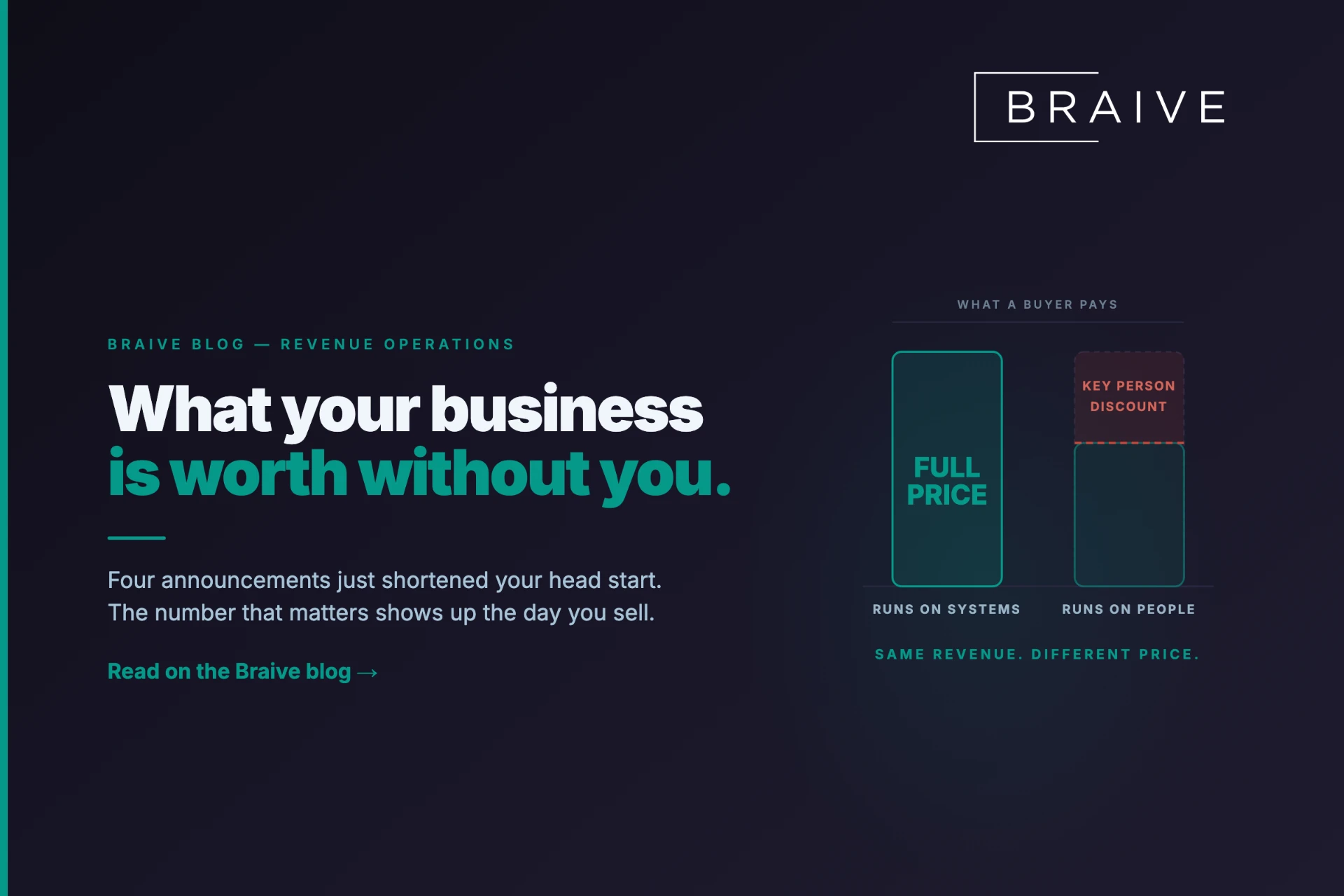
What Your Business Is Worth When You're Not in the Room
Four AI announcements just shortened your head start. What that window is worth shows up the day you sell, in an adjustment buyers call the key person discount.
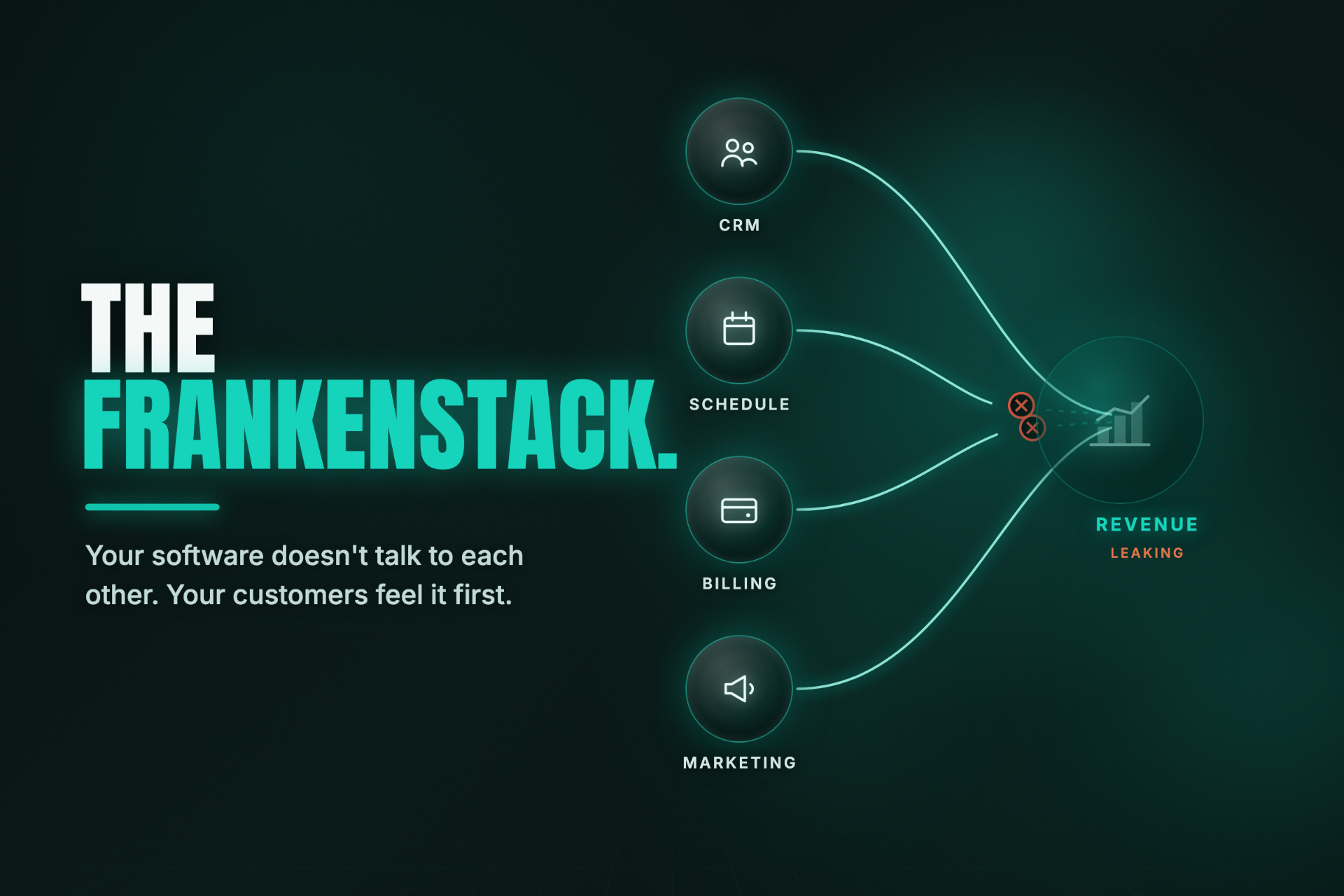
The Frankenstack: What Disconnected Software Is Costing You In Revenue
Your software doesn't talk to each other. See what the gaps between your tools cost you in lost customers and leaked revenue, and how to find them.
See where your pipeline is exposed.
12 questions. 3 minutes. Find out exactly where your operation is losing revenue — and what to do about it.